The Lodge · A Dynamic Website with Investor-Modified Sensitivities
That code isn’t right — please check and try again.
Authorized recipients only. For access, contact Daniel H. Otis · danotis@brickstonepartners.com
1. Net to the LP after an 8% cumulative preferred return and a 20% GP promote; base case (2026/27 opens ~80% occupied and holds ~82% blended for the year, returning to 95% from Fall-2027 · achieved pre-lease rent of $1,548 holds Year 1, then +$175/bed August 2027 and +$176 August 2028, plus 3.9% organic growth from 2028/29 — a $1,973 scheduled Year-3 average · 6.00% exit cap · targeted sale month 40). Cash-on-cash reflects operating cash flow after debt service; Year 1 is cash-neutral by design — a pre-funded interest-carry reserve covers the leasing ramp — with distributions commencing in Year 2. Projections only, actual results will differ. 2. After-tax figures assume 100% bonus depreciation and current usability of passive losses; the 35.0% / 2.27x variant additionally assumes a 1031 exchange at sale (a fully-taxed sale models to 20.3% IRR / 1.61x); not tax advice. 3. Total cash distributed to Brickstone investors from this asset alone since the December 2015 acquisition; sponsor records, unaudited. 4. Average annual investor IRR and average annual cash-on-cash across all Brickstone investments since 2009; sponsor records, unaudited. Past performance is not indicative of future results.
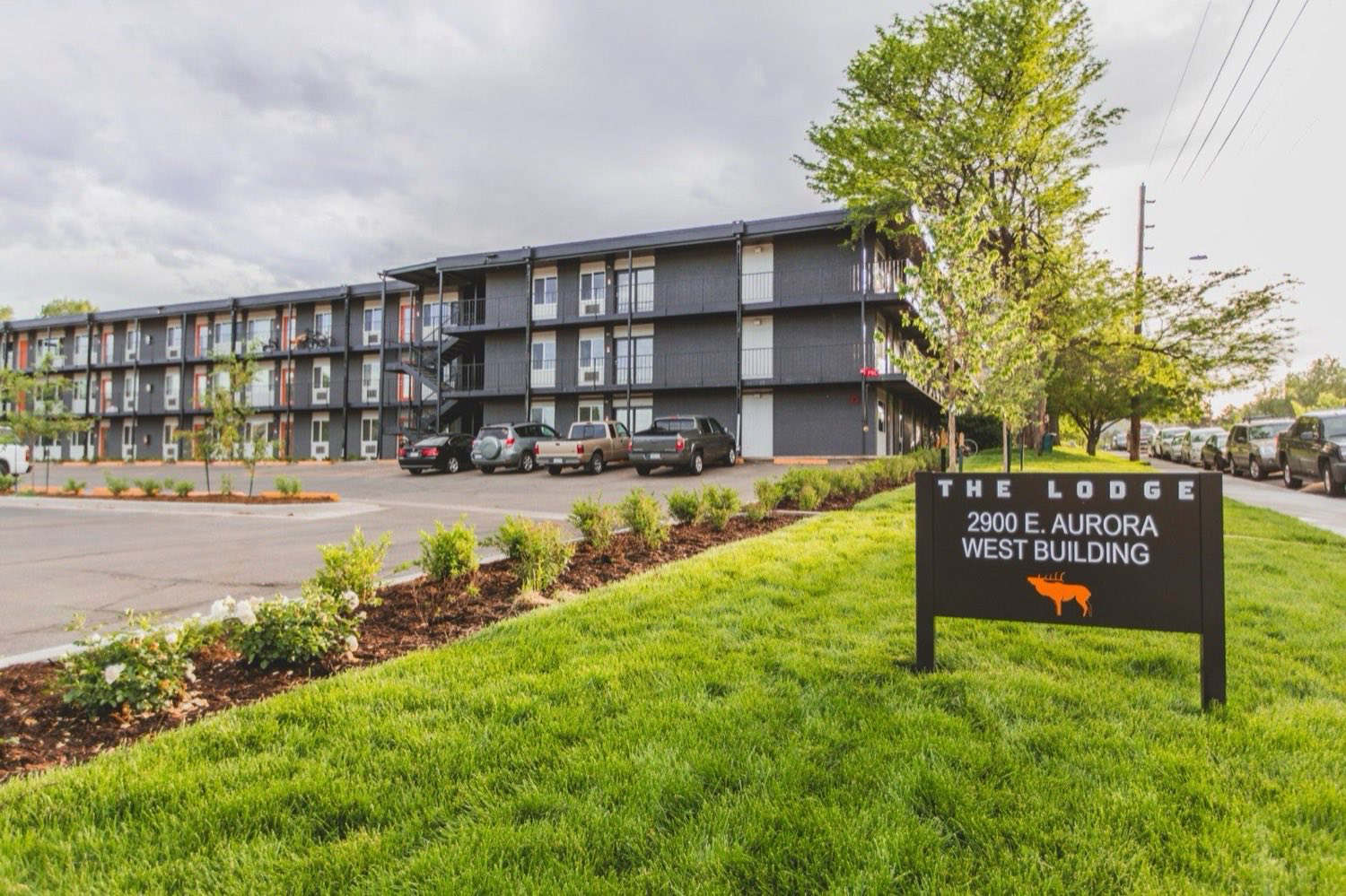
A five-minute walk from the University of Colorado, The Lodge is a 220-unit, 371-bed student-housing community being recapitalized around a clear value-add plan: a $6.05M program executed entirely in Year 1 — a brand-new 5,000 SF clubhouse and amenity barn (online for Fall-2027 leasing), in-unit improvements (new flooring and countertops throughout), and exterior cosmetic upgrades — funding a $175/bed rent step in 2027/28 and a further $176 in 2028/29.
The opportunity is rare: a proven core asset at a post-reset basis and trough occupancy — the 2026/27 year opens ~80% leased, and the underwriting prices the deal off that trough — with achieved new-lease rents of $1,548, roughly $308 per bed below market, and a floating-rate structure that keeps every exit open. Brickstone has distributed $51.7 million to investors from this asset alone so far. The Lodge has been among Brickstone’s best-performing holdings since 2015 — the initial investment returned a 53.8% IRR and 3.8× equity multiple, and the asset has since been through two successful full-cycle recapitalizations (2019 and 2022) that returned strong profits to investors while Brickstone retained ownership. Brickstone acquired the full interest of the institutional partner that held ~70% since 2018 — whose drive for early lease-up kept rents below market — and now recapitalizes the asset with new capital and invests $3,480,000 alongside the LPs, retaining an ~10% interest in the deal.
The recapitalization also carries highly advantageous tax treatment: 100% bonus depreciation is currently expected to generate significant non-cash deductions — a hypothetical $1 million investment is currently modeled to be allocated roughly $1,090,000 of non-cash losses in Year 1; the actual timing and amount of any tax benefits will depend on final structuring and each investor’s particular tax situation.
Opportunistic yields from a core, pedestrian asset in one of the best markets in the country — achieved new-lease rents of $1,548 per bed sit well below a $1,856 newer-vintage comp average and a $1,973 scheduled Year-3 rent (+$175/bed in 2027/28, +$176 plus 3.9% organic growth in 2028/29), on rate-capped floating debt that keeps an early sale or refinance open if conditions improve. Embedded redevelopment optionality on the five-acre site allows for a new 544-bed community — a net +389 beds to the site — on roughly half of the existing land, unlocking a development site valued at more than $50 million, subject to the City of Boulder’s entitlement process. Brickstone brings significant Boulder experience, having completed more than $1 billion of total investment in the market since 2008.
Underwriting assumptions: Year-1 occupancy holds ~82% blended (80% opening · ~81% September · ~82% from October), returning to 95% from Fall-2027 · rent growth 3.9% per year from Year 3 · operating-expense growth 3.0% per year · 5.0% economic vacancy & loss from stabilization · exit cap rate 6.00% at a targeted month-40 sale. Returns are projections, net to LP after an 8% preferred return and 80/20 promote; actual results will differ.
This is a live replica of Brickstone’s recapitalization model — the same engine that produces the OM’s published figures. Move any assumption and every return recomputes through the full waterfall: 8% cumulative preferred, pro-rata return of capital, then an 80/20 residual split. Projections only — actual results will differ.
Base case = OM underwriting (V10 · floating-rate structure).
Waterfall: 8% cumulative, compounding preferred (pro-rata to LP ~90% / GP ~10% capital) → pro-rata return of capital → residual 80% LP / 20% GP. Debt: the facility floats at SOFR + 235 with the coupon computed at min(SOFR, 5.00% cap strike) + spread, floored at 3.00% SOFR; the facility future-funds $3.65M of the capex; the interest-carry reserve auto-sizes at 3× the Year-1 shortfall computed at the quoted S+285 and is released end of Year 2; cap renewals ($250K/$225K) and the 0.25% extension fee apply when the sale month requires them. Asset-management fee (30 bps, growing 3%/yr) is paid from a reserve funded at close — no fee from operations. After-tax figures assume 100% bonus depreciation on a 25/13/62 cost-segregation of the $86M depreciable acquisition basis plus Year-1 capex classes, 40.8% ordinary rate, and current usability of passive losses; not tax advice.
After the commercial real estate reset of the last three years, The Lodge offers a rare entry into a proven core asset owned by the sponsor for more than a decade — recapitalized at $94 million today, down from a $130 million valuation in 2022 — a basis that prices in the correction, not the peak.
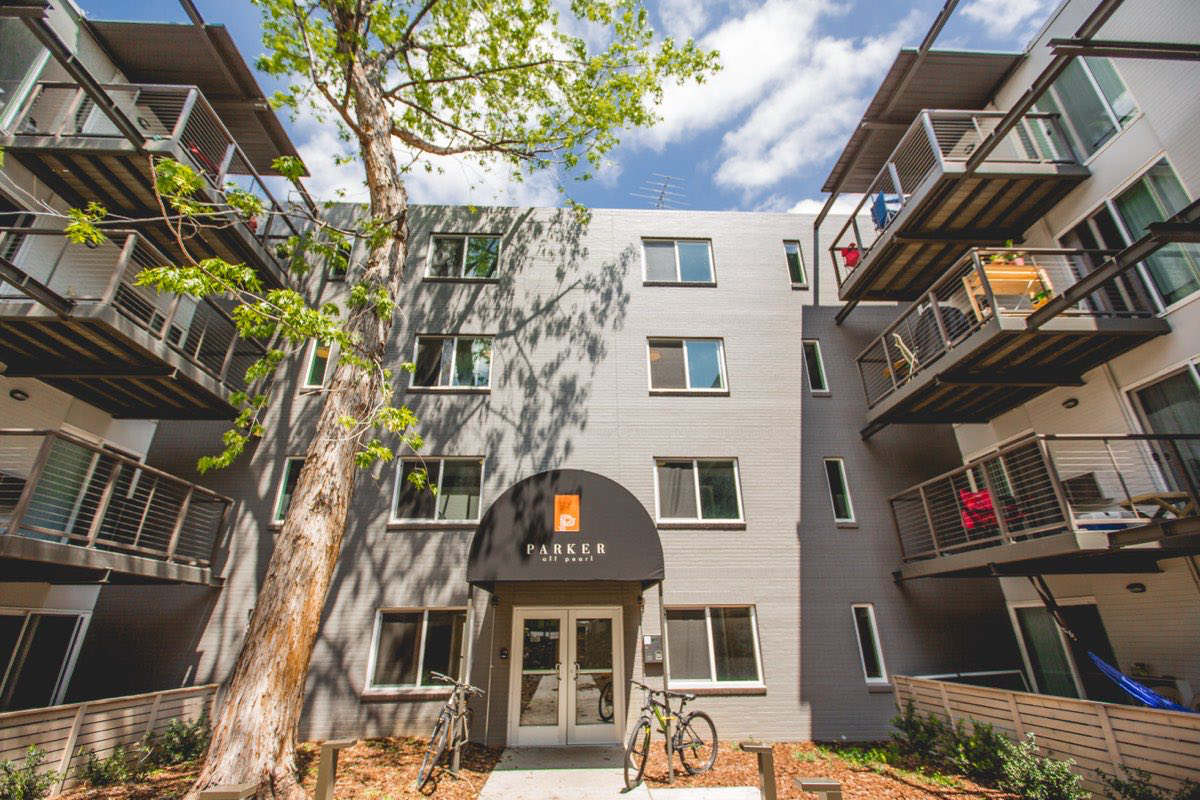
The previous institutional partner desired early lease-up in lieu of driving rents to market, rendering achieved new-lease rents roughly $308 per bed below market — and leaving the 2026/27 year opening at ~80% occupancy, vacancy concentrated in studios. That trough is the entry: the near-campus set leases from $1,644 (U Club on 28th) to $2,279 (CORE’s Hub) and $2,315 (Parker Off Pearl), well above The Lodge; occupancy recovery plus an organic mark-to-market are both available with a disciplined fall-2027 lease-up.
Brickstone has owned The Lodge more than 11 years, completing two full-cycle recapitalizations (2019 and 2022) that delivered strong profits to investors while retaining the asset. The initial investment generated a 53.8% IRR and 3.8× equity multiple, with occupancy averaging >95% across the decade through 2025/26.
The new $68.68M senior facility floats at SOFR + 235 (6.01% at the current 3.66% SOFR), interest-only, with a 5.00% SOFR rate cap purchased at close and a 3.00% floor — a 24-month initial term plus three one-year extensions. Floating-rate debt is the flexibility play: no yield maintenance, a 0.25% exit fee only, so the partnership can sell or refinance early if rates fall or the market re-rates. The facility future-funds $3.65M of the $6.05M value-add program, and a pre-funded interest-carry reserve makes Year 1 cash-neutral through the leasing ramp.
The punitive scenario: a 7.00% exit cap — a full 100 bps wider than the already-conservative 6.00% base, implying $293K/bed, below what unrenovated assets traded for in 2026 — a true dislocation case. Even there the deal models to an 8.4% net LP IRR / 1.29x pre-tax (24.5% / 1.77x with a 1031), clearing the full 8% preferred while the GP promote earns $0. The below-market reversion — not cap-rate compression or heroic growth — drives the outcome.
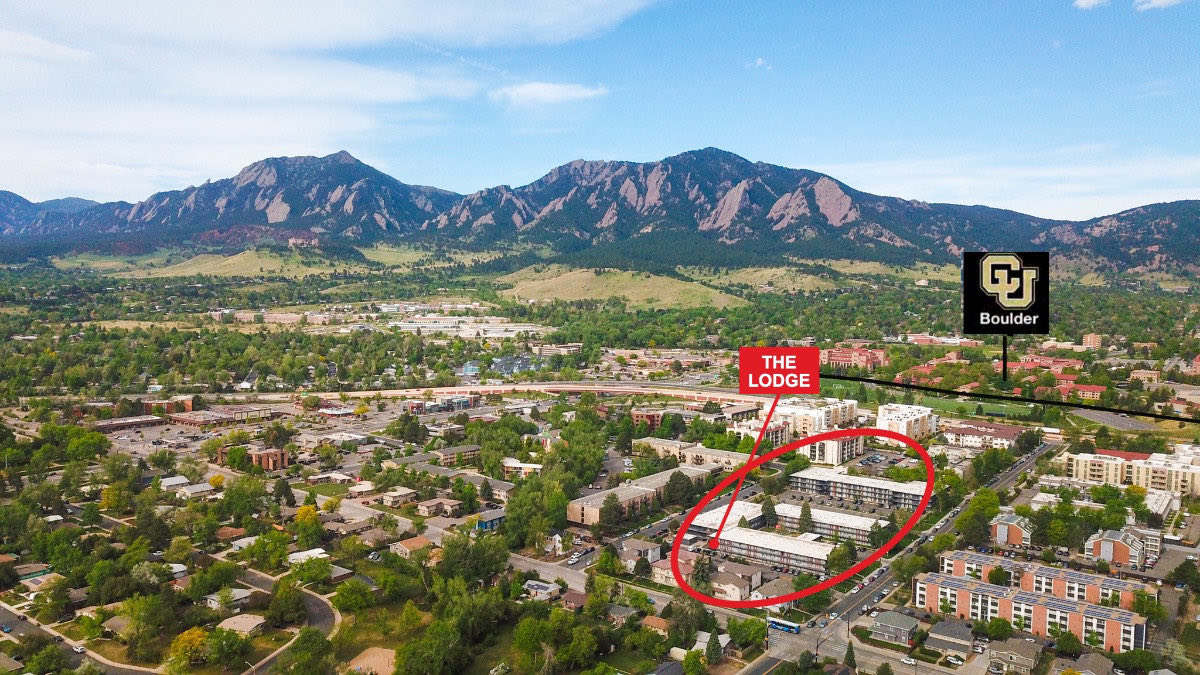
Boulder is among the most development-constrained markets in the country — height and density limits, annual residential-permit caps and structural scarcity — and The Lodge sits a five-minute walk from CU Boulder.
100% bonus depreciation is projected to generate roughly $38M of non-cash K-1 losses in Year 1 — approximately 109% of invested equity. A hypothetical $1M investment receives ~$1.09M of non-cash losses in Year 1, lifting the modeled average after-tax cash yield to 18.0% (vs. 5.1% pre-tax). Investors must rely solely on their own tax advisers.
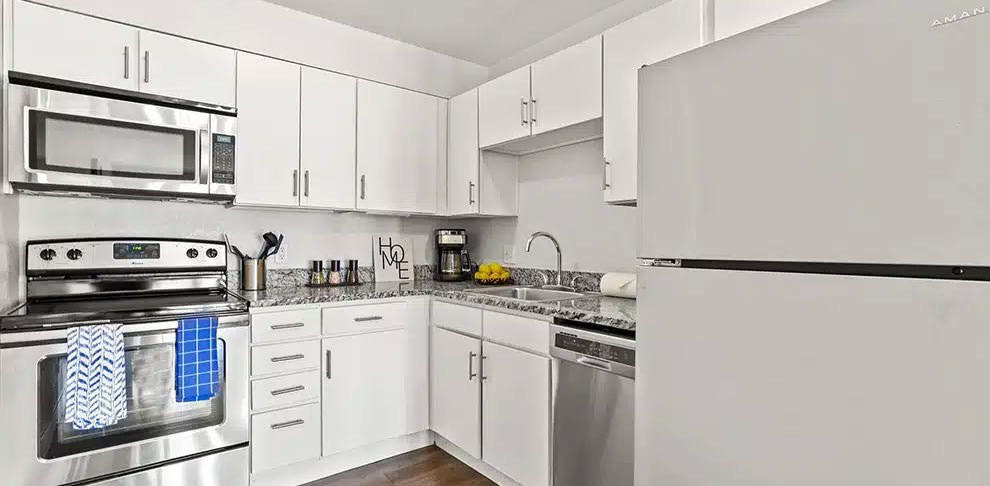
Deployed at closing: a full unit refresh (new flooring and quartz countertops, ~$11K/unit; $2.42M), parking, landscaping and new boilers ($0.50M), a purpose-built 5,000 SF clubhouse and amenity barn ($2.30M) — online for Fall-2027 leasing — plus exterior cosmetics, contingency and all other ($0.83M), with the facility future-funding ~60% of the program. Together they support the +$175 and +$176 rent steps in 2027/28 and 2028/29. Limited construction risk: amenity-focused, not ground-up.

The Lodge endures for one reason: it is the address students choose first — fully furnished quality living a five-minute walk from CU Boulder, priced below everything around it.
Owned, operated and reinvested by Brickstone for over a decade — $17M+ of capital, two full-cycle recapitalizations (2019 and 2022), and occupancy that averaged 95%+ over the decade through 2025/26. Interiors nearly new, sprinklered throughout, fully furnished — a stewarded holding the sponsor knows building by building, not a trade.
Irreplaceable land a short walk from the University of Colorado, in one of the most development-constrained markets in the country. They are not making more of this — and the City of Boulder makes certain of it.
The Lodge leases first and stays full because it offers the best living just off campus at a rent the market cannot match — achieved new-lease rents sit roughly $308 per bed below the competitive set, leaving real pricing power to compound.
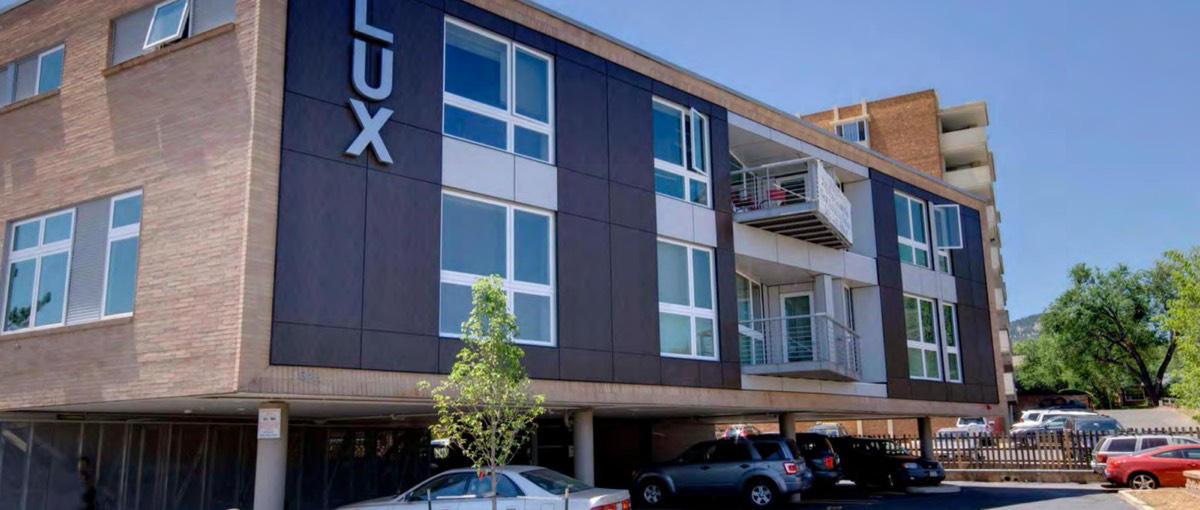
Two three-story buildings around a central pool and clubhouse on a 5.1-acre site, 0.1 miles from campus. Concrete-and-steel construction delivers the durability and quiet that distinguish The Lodge from its wood-framed competitive set — at an in-place rent of $1,495 per bed and >95% historical occupancy.
Achieved new-lease rents of $1,548/bed sit well below the near-campus comp set, where CORE’s Hub Boulder ($2,279), Parker Off Pearl ($2,315) and Union Baseline ($1,666) all clear The Lodge. Rents hold at $1,548 in 2026/27 through an 82% blended occupancy year, then step +$175/bed in 2027/28 and +$176 plus 3.9% organic growth in 2028/29 to a $1,973 scheduled Year-3 average — with the full value-add program complete in 12 months supporting the ask — the single highest-conviction component of the plan.
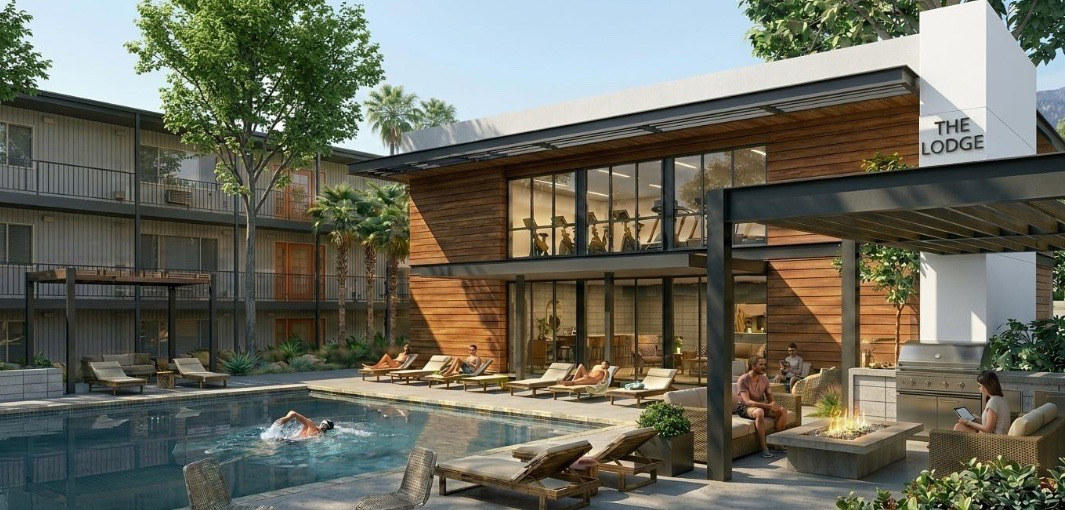
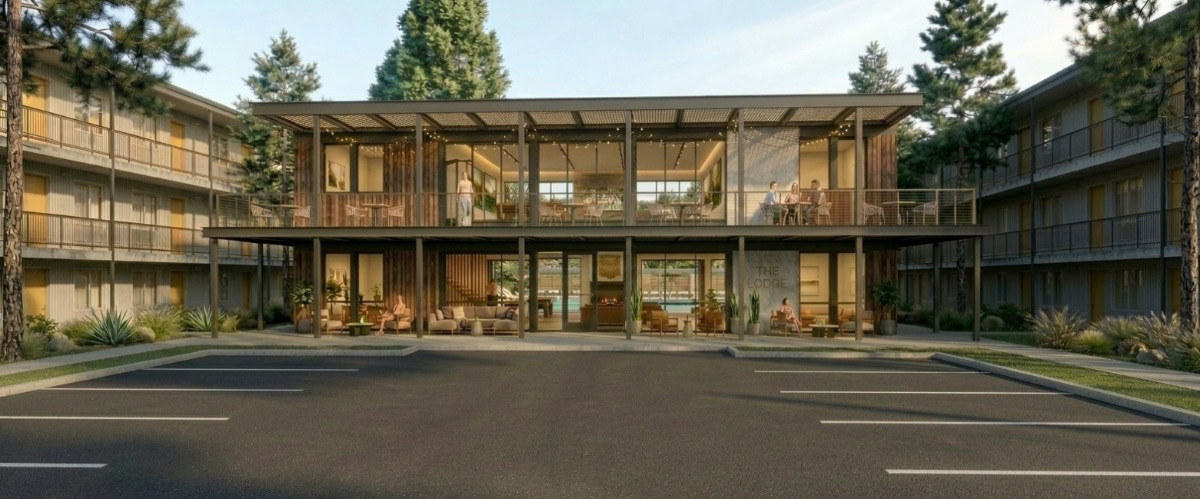
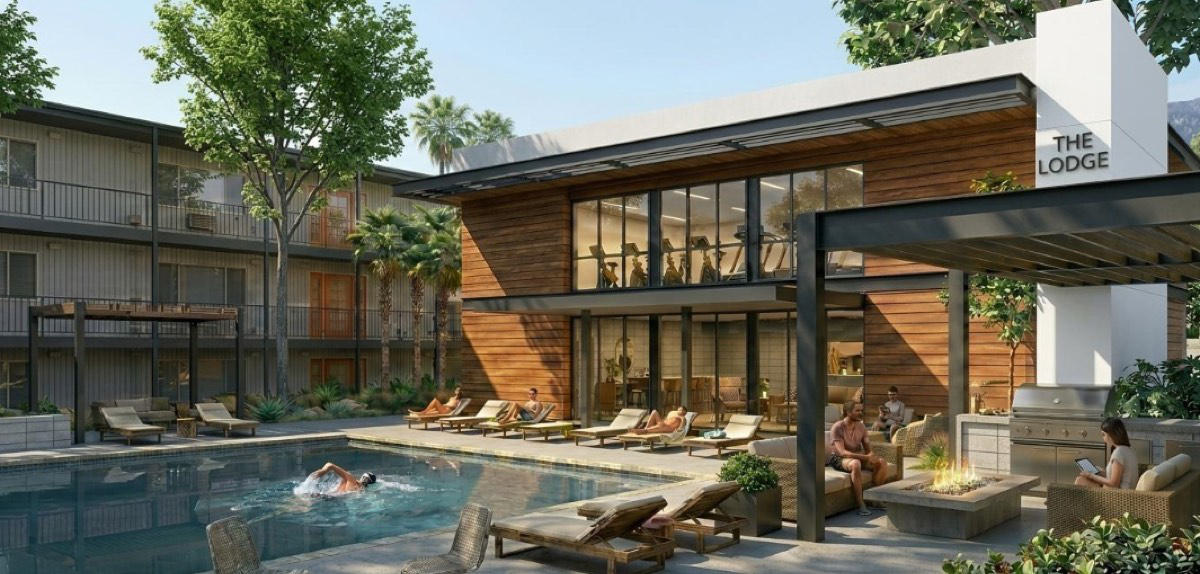
The full program deploys at closing: interiors are refreshed with new flooring and quartz countertops, parking, landscaping and boilers are upgraded, and a new purpose-built clubhouse and amenity barn — pool, sauna, pickleball, grills and FF&E — is delivered in Year 1, online for Fall-2027 leasing, reinforcing the rent reversion and premium pricing.
Five acres in the heart of Boulder carry embedded density under the site’s existing RH-5 zoning, subject to the City of Boulder’s entitlement process — detailed in the Redevelopment section below.
| Value-Add Capital Plan | |
|---|---|
| Interior renovation — flooring & quartz ($11K/unit × 220) | $2.42M |
| Parking, landscape & new boilers | $0.50M |
| Clubhouse building & FF&E — online Fall 2027 | $2.30M |
| Exterior cosmetics, contingency & all other | $0.83M |
| Total CapEx — all Year 1 (~60% facility-funded) | $6.05M |
Rent plan under current underwriting assumptions: the achieved $1,548/bed pre-lease rent holds in 2026/27 through an 82% blended occupancy year, then steps +$175 in 2027/28 ($1,723) and +$176 plus 3.9% organic growth in 2028/29 to a $1,973 scheduled Year-3 average, continuing at 3.9% thereafter. Business-plan elements subject to change based on market, cost, regulatory and other conditions.
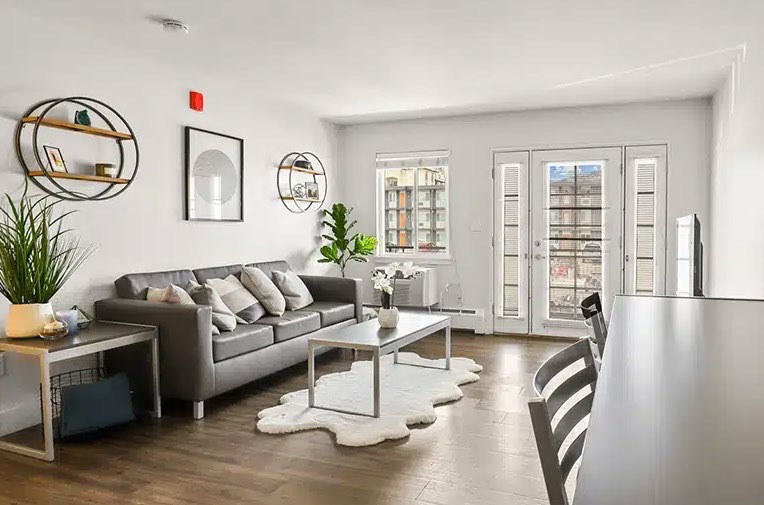
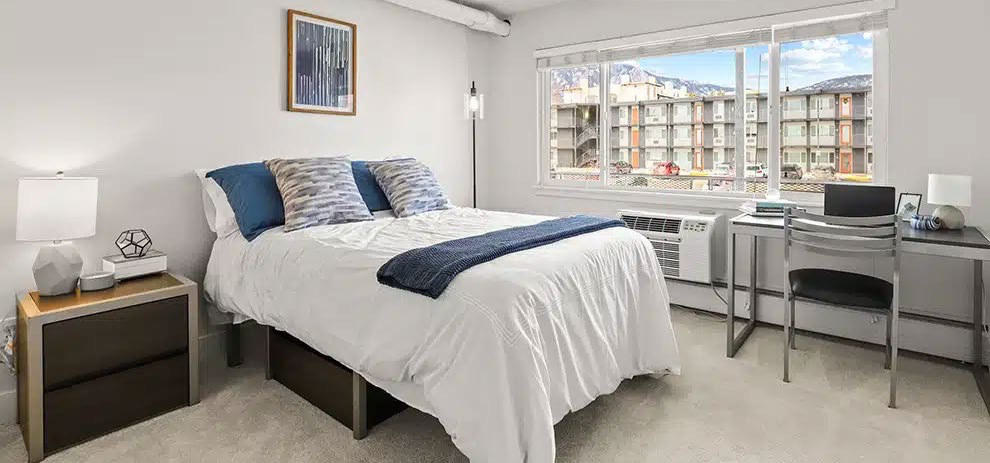
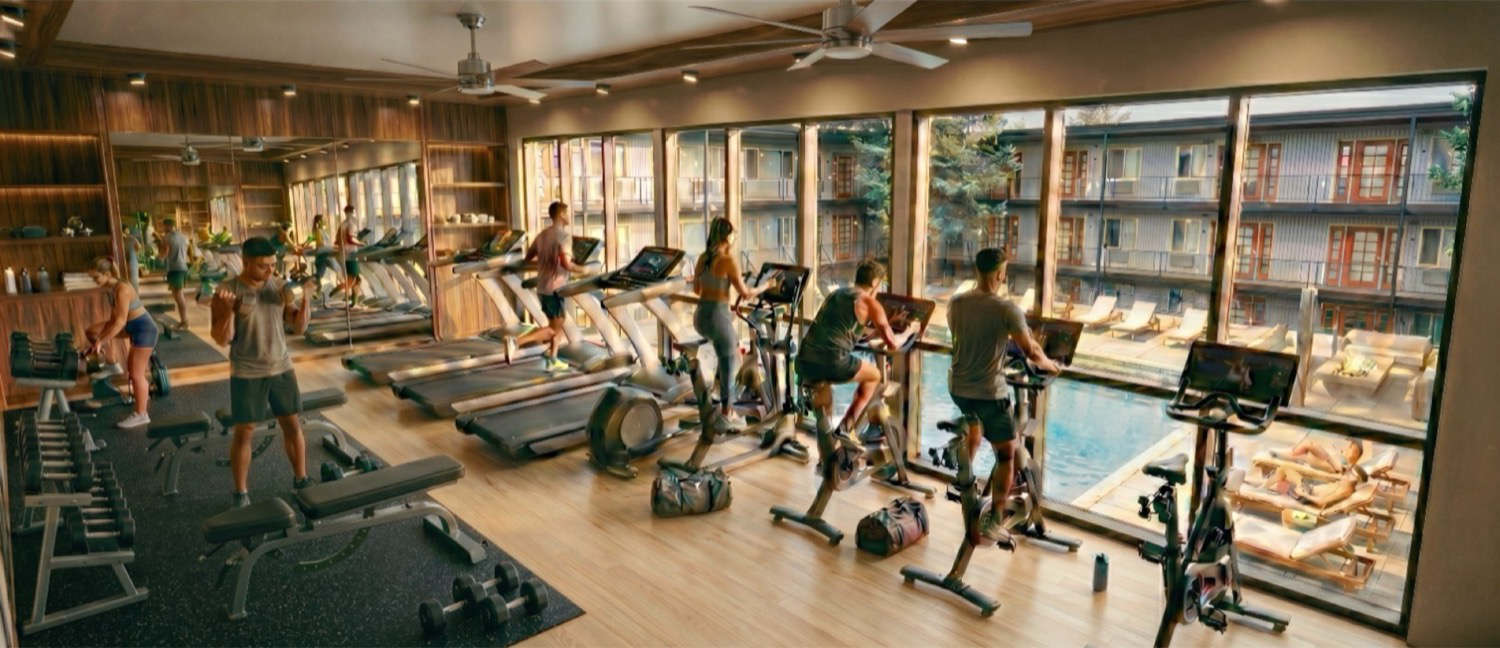
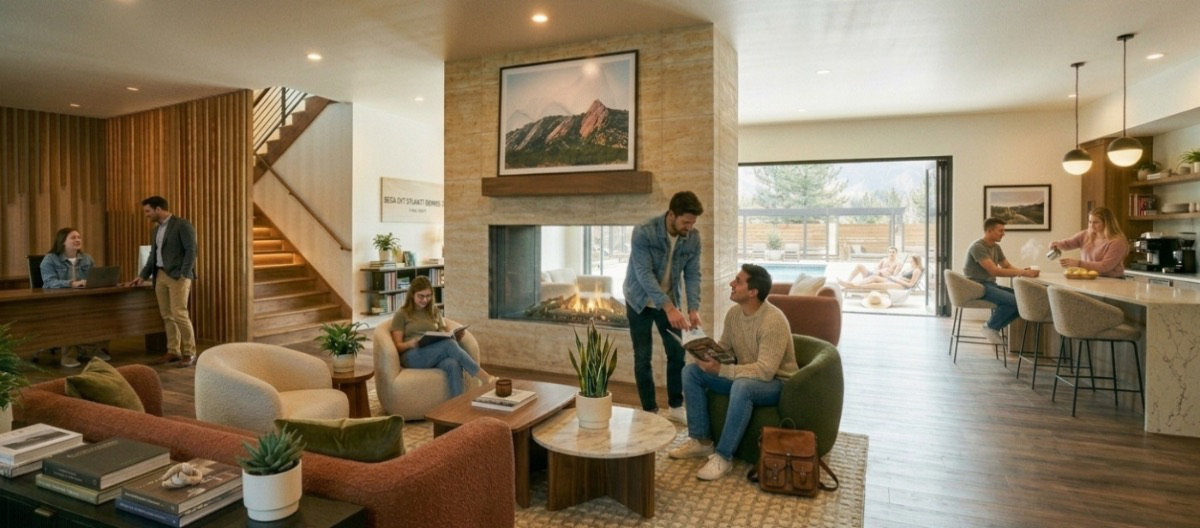
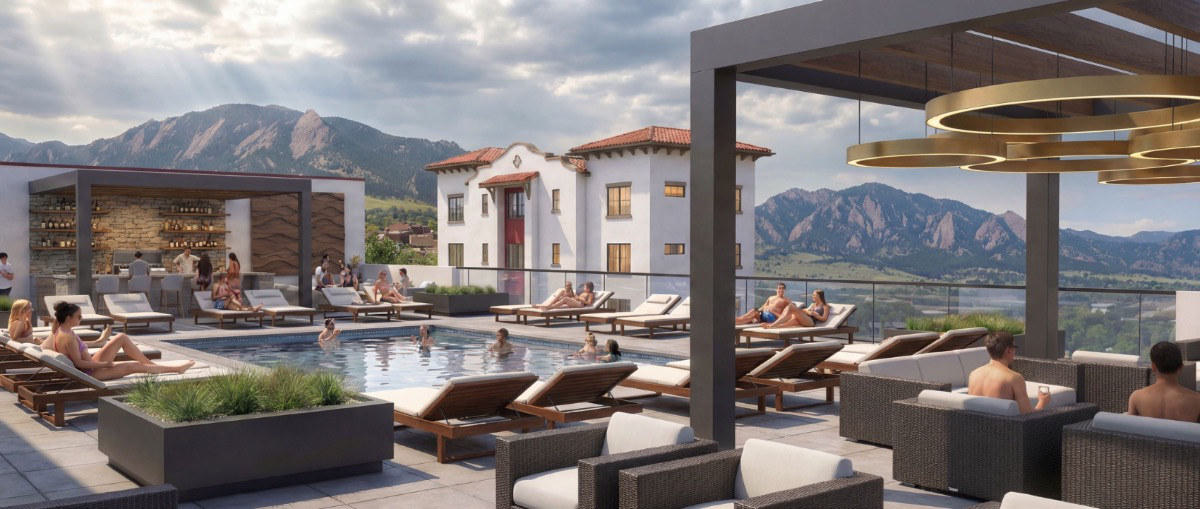
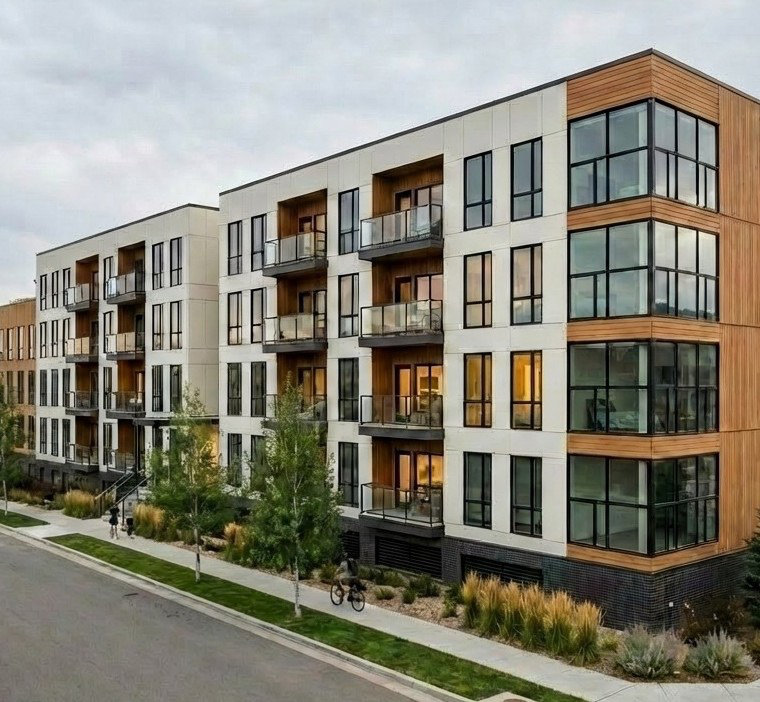
Renovated interiors with new flooring, quartz and stainless appliances — fully furnished and steps from campus, with Flatiron and mountain views from many homes. The new clubhouse, pool and amenity program comes online for Fall-2027 leasing.


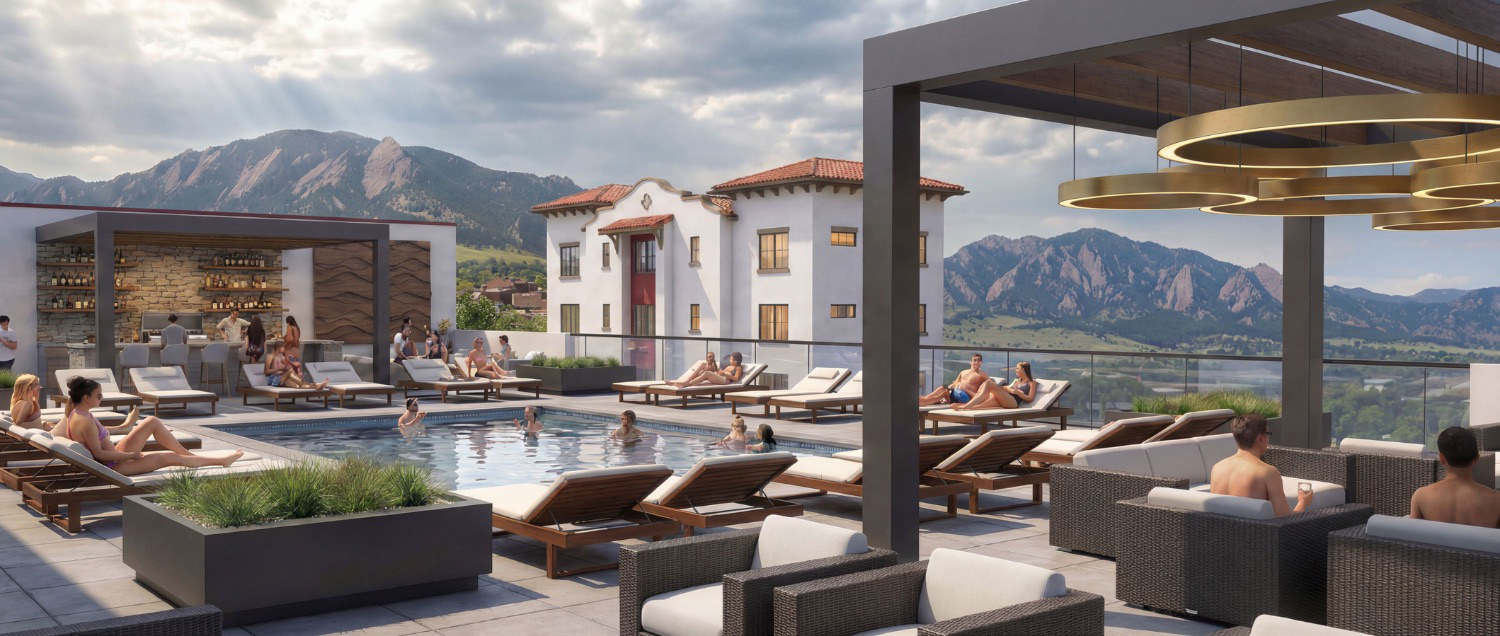
Renderings shown; final design subject to entitlement. Actual design and scope may differ materially or may not be implemented. We plan to tear down the existing clubhouse and build the new version along with a new pool, FF&E and other exterior upgrades.
The Lodge’s achieved new-lease rent of $1,548 per bed (in-place leased $1,495) sits below the average of both its newer-vintage ($1,856) and older-vintage ($1,644) competitive sets. The spread is stark at both ends of the market — this reflects the prior institutional owner’s drive for early, full lease-up, and it forms the basis for the mark-to-market opportunity.
| Competitive Set | Year | Beds | Rent / Bed | vs. Lodge |
|---|
Source: Newmark Student Housing rent-comparable survey (2025–2026 academic year), leased rent per bed; “vs. Lodge” is the per-bed premium over The Lodge’s in-place rent. Projected rents are estimates and not a guarantee.
Returns were stress-tested on the variable that matters most — the exit capitalization rate — from a best case to a true dislocation. The base case is itself a stress posture: 82% Year-1 occupancy, a 6.00% exit cap and the full $6.05M program funded at close. The live matrix below is computed by the same engine as the model above.
Net LP IRR / MOIC after pref and promote, at the targeted month-40 sale; the exit cap is applied to forward 12-month NOI at sale ($7.62M); base case 6.00%. Average cash-on-cash is exit-independent at 5.1% pre-tax (18.0% with the tax benefit).
Even the 7.00% worst case clears the full 8% preferred — the GP promote earns $0 and LPs still receive their preference — at an implied $293K/bed, below unrenovated 2026 comps: a true dislocation case. The below-market rent reversion, not cap-rate compression, drives the outcome.
Computed live by the on-page engine at base assumptions otherwise; the outlined cell is the OM base case (6.00%, plan rents). Full sensitivity matrices are available upon request. For discussion purposes only; projections are not a guarantee of future results.
The One Big Beautiful Bill currently provides for 100% bonus depreciation on large portions of the building. Through a cost-segregation study, the partnership expects to pass through roughly $38 million of non-cash losses in Year 1 — approximately 109% of invested equity, or about $1,090,000 per $1 million invested — distributed on your Schedule K-1.
The availability and magnitude of any bonus depreciation or other tax benefits will depend on future tax law, IRS guidance, cost-segregation results, and each investor’s tax profile, including passive activity and at-risk limitations. Figures assume basis step-up structuring; a fully-taxed sale models to 20.3% IRR / 1.61x; Colorado state tax not modeled. Investors must rely solely on their own tax advisers. Not tax advice.
| Basis | Net LP IRR | Net LP Multiple | Avg Cash-on-Cash |
|---|---|---|---|
| Pre-Tax | 19.1% | 1.75x | 5.1% |
| With Tax Benefit — 1031 at sale | 35.0% | 2.27x | 18.0% |
| Variant — fully-taxed sale | 20.3% | 1.61x | — |
| Benchmark — same cash, no depreciation shelter | — | — | 3.0% |
Returns are net to the LP over the targeted ~40-month hold, after an 8% cumulative preferred return and a 20% GP promote. After-tax figures assume 100% bonus depreciation and current usability of passive losses; the 1031 variant additionally assumes a like-kind exchange at sale. Year 1 is cash-neutral by design: the facility future-funds $3.65M of the $6.05M program and a pre-funded interest-carry reserve covers the leasing ramp, with distributions commencing in Year 2 and the preferred return accruing from close. Cash-on-cash reflects operating cash flow after debt service, excluding Year-1 capex. Actual returns are likely to differ, potentially materially, and no assurance is given that such returns will be achieved.
8% cumulative, compounding preferred return, paid pro-rata to LP and GP capital.
Pro-rata return of contributed capital to LP (~90%) and GP (~10%).
Remaining proceeds split 80% to LP / 20% to GP (Brickstone promote) after the preferred return and return of capital.
| Metric | Pre-Tax | With Tax Benefit (1031) |
|---|---|---|
| Recap equity invested | $34.8M ($31.3M LP / $3.5M GP) | — |
| Net LP IRR / MOIC | 19.1% / 1.75x | 35.0% / 2.27x |
| Project-level IRR / MOIC (pre-promote) | 20.4% / 1.81x | — |
| Net LP profit ($) | $23.5M | — |
| Avg cash-on-cash | 5.1% | 18.0% |
Net LP figures are after the 8% cumulative, compounding preferred return, pro-rata return of capital and 20% GP promote; project-level figures are levered, pre-promote. Tax-benefit figures assume a 1031 exchange at the targeted month-40 sale; a fully-taxed sale models to 20.3% / 1.61x. All figures from the recapitalization model (August 2026), base case; projections only.
Opens an email to investor relations — or call Daniel H. Otis directly at 303.815.6705.
| Itemized Fees & GP Costs | |
|---|---|
| Asset-management fee (annual) — on the $94.0M recap valuation, growing 3%/yr · paid from a $974,350 reserve funded at close — no fee paid from operations | 30 bps |
| GP promote (after 8% pref + return of capital) | 20% of residual |
| Acquisition / disposition / financing fees | None |
Brickstone co-invests ~10% of the recap equity ($3.5M cash) alongside LP capital ($31.3M, ~90%) — sponsor and investor dollars side by side. The $974,350 asset-management reserve funded at close is sized to exact disbursements through the targeted month-40 sale — no asset-management fee is paid from operating cash flow.
The new $68.68M senior facility floats at SOFR + 235 (6.01% at the current 3.66% SOFR), interest-only, with a 5.00% SOFR rate cap purchased at close and a 3.00% floor — a 24-month initial term plus three one-year extensions. No yield maintenance, a 0.25% exit fee only: the structure is built to sell or refinance early if conditions improve. A pre-funded interest-carry reserve sized at 3× the Year-1 shortfall makes the ramp year cash-neutral. No mezzanine or preferred equity.
| Uses | |
|---|---|
| Asset acquisition (imputed value) | $94.00M |
| Value-add CapEx — all Year 1 | $6.05M |
| AM-fee reserve (through targeted sale) | $0.97M |
| Loan fee (1.0%) | $0.69M |
| Rate cap premium (24-mo, 5.00% SOFR strike) | $0.65M |
| Interest-carry reserve (3× Yr-1 shortfall) | $0.74M |
| Legal, title, reports & cost seg | $0.37M |
| Total Uses | $103.47M |
| Sources | |
| Senior facility ($65.03M initial + $3.65M future-funding) | $68.68M · 66.4% |
| LP equity (~90%) | $31.31M · 30.3% |
| GP equity — Brickstone cash (~10%) | $3.48M · 3.4% |
| Total Sources | $103.47M |
The facility future-funds $3.65M of the capex (~60%), drawn during Year 1; the borrower funds the remaining $2.40M in the equity commitment. Cash-flow sweep from payment 18 if debt yield <7.00% (base case passes at 9.0%); rate stress at 3.85% SOFR: 6.20% coupon, 18.7% net LP IRR. Legal $250K · title, escrow & recording $50K · third-party reports $55K · cost-segregation study $20K.
DSCR on the full $68.68M facility at the capped coupon; yield on cost on the $100.05M basis ($94M + $6.05M capex). Underwriting years 1–5; targeted sale occurs in Year 4 (month 40), inside the second one-year extension.
Net operating income grows from $4.27M at the Year-1 occupancy trough to $6.19M in Year 2 and $7.22M by Year 3 — roughly +69% — driven first by the occupancy recovery, then by the rent reversion and the value-add program — a 7.22% Year-3 yield on cost.
| FY2022A | FY2023A | FY2024A | FY2025A | FY2026F | UW Yr 1 | UW Yr 2 | UW Yr 3 | |
|---|---|---|---|---|---|---|---|---|
| Physical occupancy | 100% | 98.2% | 99.4% | 98.2% | 95.6% | UW: 82% blended Yr 1 · 95% (5.0% econ loss) from Yr 2 | ||
| Rent / bed / month | $1,138 | $1,254 | $1,353 | $1,424 | $1,500 | $1,548 | $1,723 | $1,973 |
| Total income / EGI | $5.75M | $6.40M | $6.83M | $7.00M | $7.26M | $6.30M | $8.28M | $9.38M |
| Operating expenses | $1.44M | $1.52M | $1.82M | $2.04M | $2.11M | $2.03M | $2.09M | $2.16M |
| Net operating income | $4.31M | $4.89M | $5.00M | $4.96M | $5.14M | $4.27M | $6.19M | $7.22M |
| NOI margin | 74.9% | 76.3% | 73.3% | 70.9% | 70.9% | 67.8% | 74.7% | 77.0% |
Historicals from the asset-management model; FY26 = forecast with Q1-26 actuals. UW Year 1 prices the occupancy trough: 82% blended (294 of 371 beds pre-leased at 8/17, vacancy concentrated in studios) at the achieved $1,548 rate — and ties to the lender’s own as-is underwritten cash flow (~$4.1M). From Fall-2027 the underwriting returns to 95% occupancy with a 5.0% economic-loss allowance. Unaudited, sponsor-prepared.
| Unit Type | Units | Beds | In-Place / Unit | In-Place / Bed | Yr-3 / Unit | Yr-3 / Bed |
|---|
Left columns: existing in-place leased rents (2025–26). Right columns: projected Year-3 rents after the +$175/bed (Fall 2027) and +$176 (Fall 2028) steps from the $1,548 achieved new-lease average, plus 3.9% organic growth in 2028/29, to a $1,973/bed scheduled Year-3 average (+$478/bed over in-place). Projected rents; actual achieved rents may be higher or lower. Source: Newmark Student Housing; Brickstone underwriting.
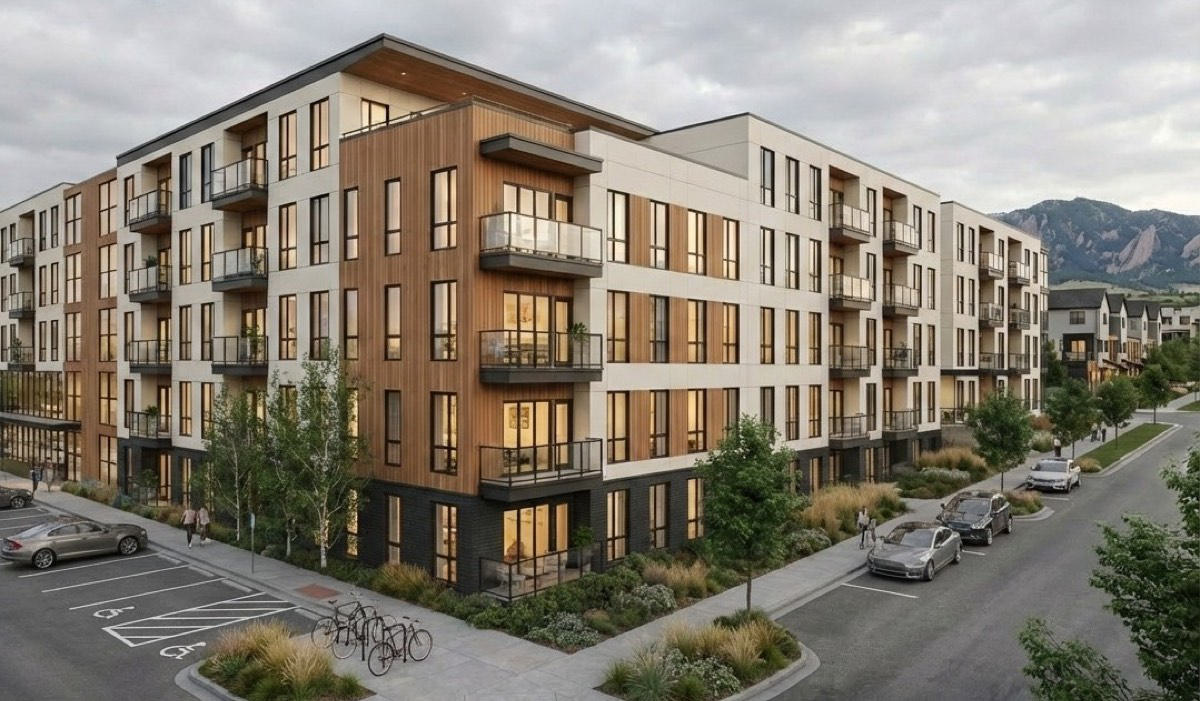
Brickstone’s proposed redevelopment of the west portion of The Lodge site — future rendering; subject to entitlement.
The property today is two three-story buildings — an “I”-shaped and a “U”-shaped building — separated by a surface parking lot, a rare opportunity to materially increase density. Ownership has outlined a plan to demolish the “I”-building and construct a new five-story community on ~2.5 acres, delivering 544 beds / 132 units, while the “U”-building stays operational throughout construction.
A 260-space subterranean garage — sited outside the 100-year floodplain — preserves parking ratios while freeing surface land for higher-density use; the U-building retains 116 surface spaces. Best-in-class amenities, including a clubhouse and rooftop pool overlooking the Flatirons, elevate the asset’s competitive position.
The contemplated density and uses are consistent with the site’s existing RH-5 zoning — no rezoning is being sought. The plan remains subject to the City of Boulder’s full entitlement process, including development review and permitting. Brickstone has completed a pre-application review with the City and received positive feedback, and intends to begin the formal process immediately upon closing. Newmark’s National Student Housing team has provided an indicative, non-binding estimate that a development site of this size could be valued at approximately $52 million; this is not an appraisal or a guarantee of value.
| Proposed Building | Units | Beds | Unit SF |
|---|---|---|---|
| 2 BR | 24 | 48 | 700 |
| 3 BR | 18 | 54 | 945 |
| 4 BR | 18 | 72 | 1,185 |
| 5 BR | 42 | 210 | 1,430 |
| 5 BR Corner | 20 | 100 | 1,525 |
| 6 BR Corner | 10 | 60 | 1,775 |
| Proposed total | 132 | 544 | 163,450 SF |
| Combined (U + proposed) | 280 | 760 | 248,718 SF |


The redevelopment is upside, not underwritten in base-case returns; the asset performs as a stabilized hold without it. There can be no assurance that any redevelopment will be approved, commenced, or completed on the timeline or terms described herein, if at all. Renderings are illustrative only.
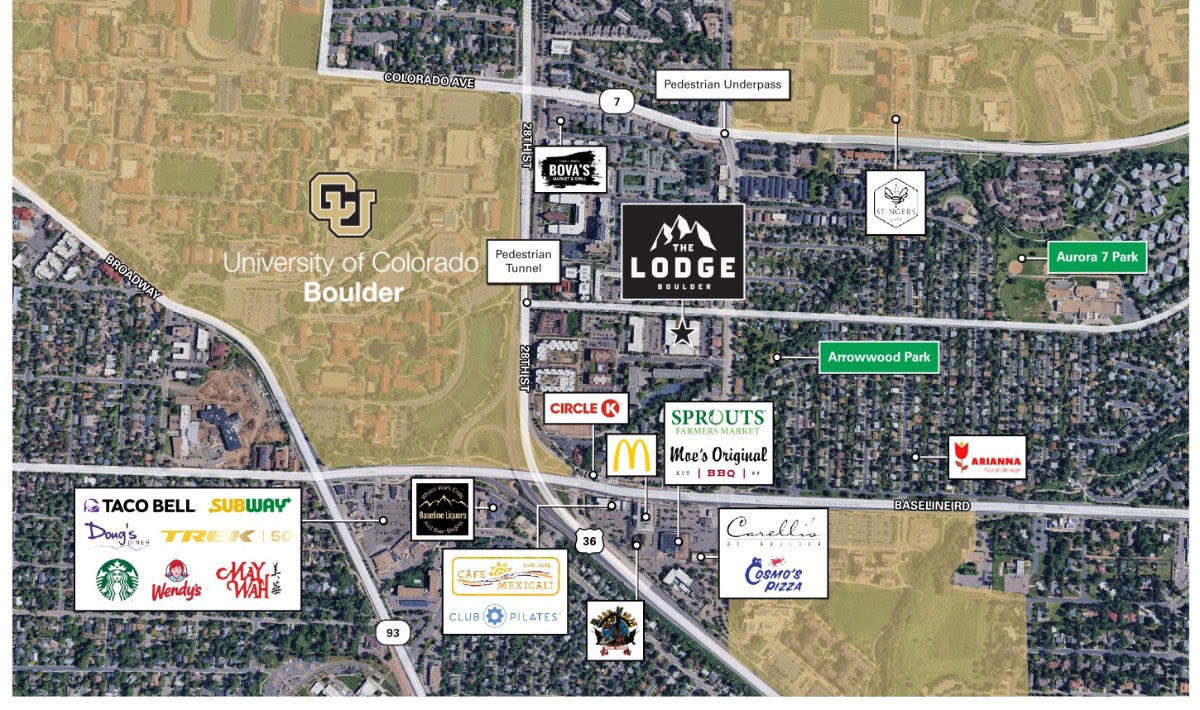
The Lodge sits a five-minute walk from the University of Colorado Boulder, beneath the Flatirons — with everyday retail, dining and parks at the doorstep.


Per Newmark Student Housing, only one student-housing development is currently under construction in the CU Boulder market — The Standard at Boulder (Landmark), delivering Fall 2027. With roughly a quarter of students housed on campus, approximately 29,000 require off-campus housing. Boulder’s height and density limits, annual residential-permit caps and open-space greenbelt produce persistent scarcity across every asset class.
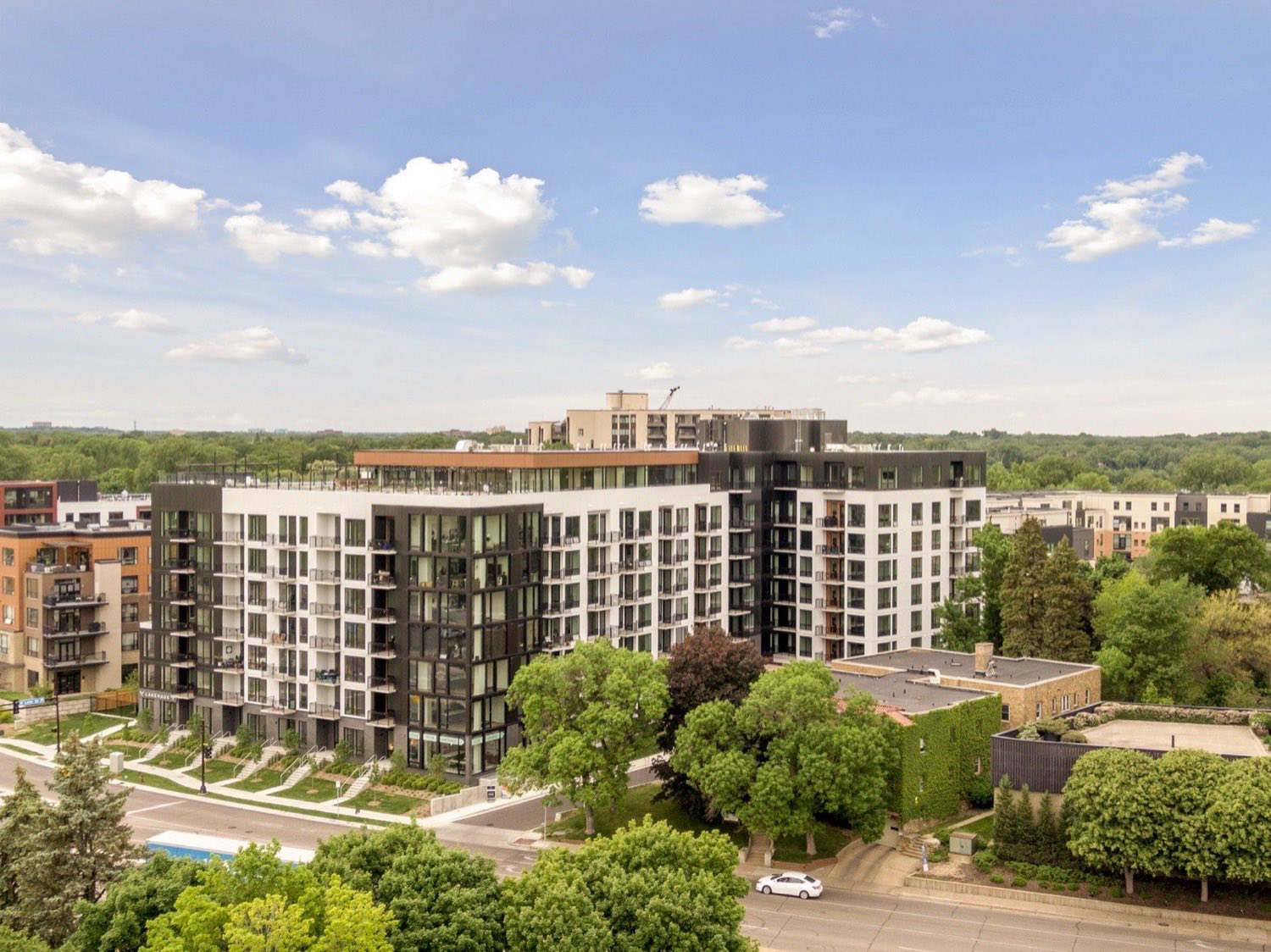
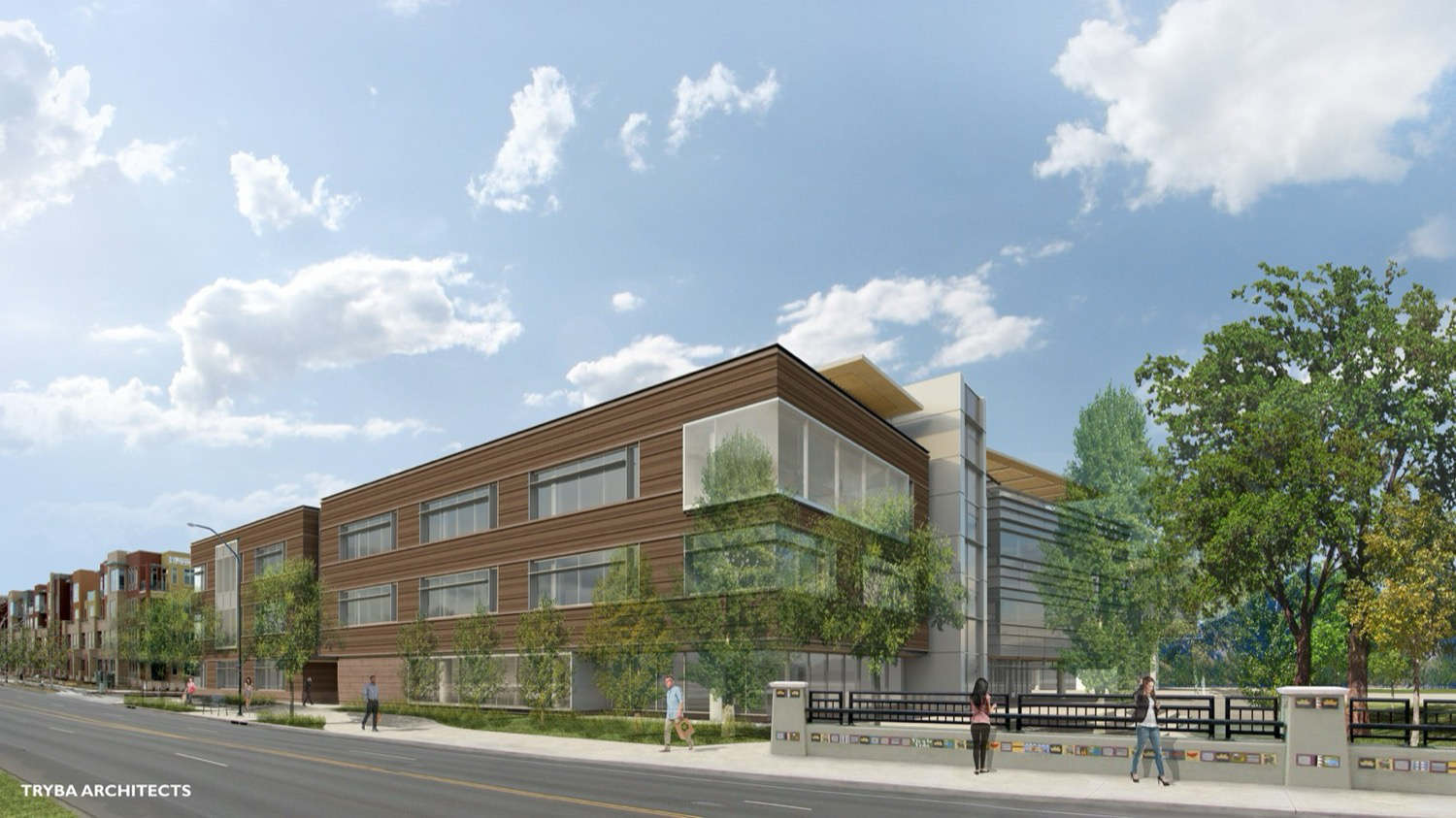
Approximately 2,000 additional beds sit in planning stages around CU Boulder — most facing the same entitlement and permit constraints. Landmark’s 900+ bed community (Fall 2027) appears priced well in excess of $2,000 per bed — above and outside The Lodge’s competitive set — a tailwind that lifts the market’s rent ceiling.
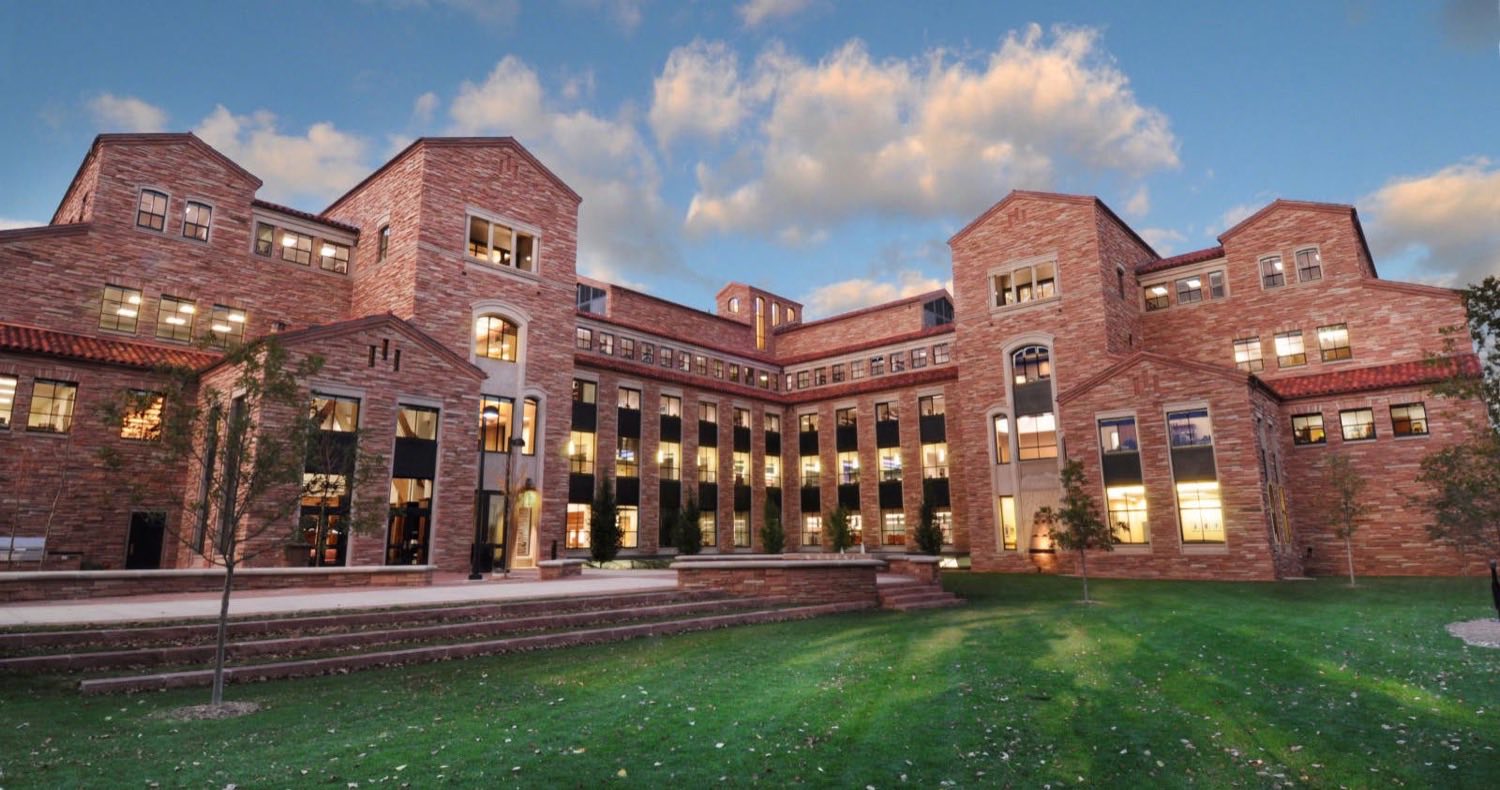
Established in 1876 against the foothills of the Rocky Mountains, CU Boulder is one of the premier public research universities in the United States — an R1 “very high research activity” institution spanning nine colleges and schools, more than 3,800 courses across 150 fields of study, and a student body drawn from all 50 states and over 100 countries.
Home to CIRES, the Laboratory for Atmospheric & Space Physics (LASP) and the BioFrontiers Institute. The Colorado Buffaloes compete in NCAA Division I as members of the Big 12 — anchoring school spirit, alumni engagement and sustained off-campus housing demand.
With roughly 9,534 on-campus beds against nearly 39,000 students, the overwhelming majority of upperclassmen live off campus — sustaining durable demand for well-located assets like The Lodge. Enrollment has grown roughly 25% over the past decade.
Boulder’s open-space program has preserved more than 45,000 acres of land. Chautauqua Park — a National Historic Landmark — anchors a network of trails into the Flatirons, while the Boulder Creek Path threads the city. That preservation ethos also constrains new development, reinforcing scarcity across every asset class.
Boulder is a hub of entrepreneurship and clean technology — home to a significant Google presence and the National Renewable Energy Laboratory (NREL), with CU Boulder’s research capabilities catalyzing collaboration between academia and industry.
The following discussion is summary in nature and does not purport to describe all of the risks associated with the proposed investment.
The landscape is changing quickly, but we believe students will continue to invest in their education at “experiential” universities such as CU Boulder and other top-tier institutions.
The 2026/27 year opens ~80% pre-leased (294 of 371 beds; vacancy concentrated in studios), and underwriting assumes ~82% blended occupancy this year with a return to 95% from Fall-2027; a slower recovery or softer student demand would compress Year-1–2 cash flow, with the pre-funded carry reserve as the first buffer. Capturing the mark-to-market depends on the 2027 and 2028 leasing cycles. Mitigated by in-place rents already ~$361/bed below the newer-vintage comp average and 95%+ occupancy every year since 2015.
The plan is consistent with the site’s existing RH-5 zoning and has cleared a pre-application review with positive City feedback; however, it remains subject to the City of Boulder’s full entitlement process — development review, permitting and timing are uncertain. The redevelopment is upside, not underwritten in base-case returns; the asset performs as a stabilized hold without it. There can be no assurance that any redevelopment will be approved, commenced, or completed on the timeline or terms described herein, if at all.
The clubhouse, pool and exterior program carries cost and timing risk. Scope is limited and amenity-focused (no ground-up), interiors are recently renovated, and the budget reflects firm bids with no contingency reserve — overruns, if any, would be funded from operating cash flow.
The $68.68M facility floats at SOFR + 235; a 5.00% SOFR cap (24-month term, renewals underwritten at $250K/$225K) bounds the coupon at 7.35% and a 3.00% floor sets a 5.85% minimum. The targeted month-40 sale sits inside the second one-year extension (0.25% fee, subject to customary tests: the Year-3 debt-yield and 1.20x DSCR tests both pass in base case). SOFR above the cap strike raises carry; conversely, no yield maintenance means falling rates open an early refinance or sale. A $6.52M minimum-interest provision is satisfied by the month-40 sale in base case.
Landmark’s 900+ bedroom community (delivering fall 2027) is the only new project currently under construction. Its pricing is unreleased but appears set well in excess of $2,000 per bed — above and outside our competitive set — a tailwind that lifts the market’s rent ceiling. Roughly 2,000 additional beds sit in various planning stages and may or may not be built, while Boulder’s height, density and permit limits continue to cap realized supply.
Colorado has enacted increasingly tenant-favorable legislation over the past three years (eviction, fee and just-cause measures). Student housing leased by the bed with parental guaranties is comparatively insulated, and Brickstone’s long Colorado operating history positions it to adapt as rules evolve.
Both markets have absorbed a historic reset over the past three years, driven largely by elevated new supply. As of Q4 2025 Boulder vacancy appears to be tightening with positive absorption, and Denver is improving gradually as of Q1 2026.
| Project | Type | Avg. C/C | IRR | Multiple |
|---|
Brickstone Partners historic performance and projected yields since 2009. Unaudited and sponsor-prepared. Individual investment names are withheld; deal-level detail is available to qualified investors upon request. Active-property projections assume a 7-year run period, 3.8% annual rent growth, 3.0% expense growth and a 5.5% exit cap. Certain early-vintage figures are estimates from older records and have not been independently verified. Past performance is not indicative of future results.


Founded in 2001, Brickstone Partners has directly completed more than $1 billion of multifamily, student housing, retail and office investment and development deals — pursuing opportunities with an asymmetry of risk and reward: opportunistic yield with less risk than normal. Brickstone has owned and operated The Lodge since 2015, through two full-cycle recapitalizations and more than $17 million of reinvestment.

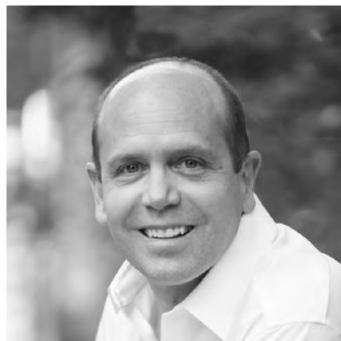
Founded Brickstone at age 20 while in college. More than $1B of investment and development deals; opportunistic yields to investors; capital from some of the largest family offices and institutions in the world. USAF veteran · Division I pole vaulter · aviator (fixed-wing & helicopters) · piano 30+ years · past boards, Folds of Honor & AOPA. North Dakota State ’05; Harvard Real Estate ’10 & ’13.
303.815.6705 · danotis@brickstonepartners.com

20+ years of senior finance leadership. Prior: CFO of Highland Ventures (family office, 33+ acquisitions across 16 states); HealthTrust — helped coordinate a subsidiary sale to Blackstone; Landmark Properties — fund management and investor reporting across a $7B+ student-housing platform, primary finance contact for sovereign-wealth equity partners. MBA & BBA, Mercer; licensed CPA (TN); Nashville.

Founder & managing principal, STUDIO Development Services; licensed architect and founder of STUDIO Architecture. 25+ years · 1.5M+ SF delivered · 500+ residences; 300+ apartment units delivered with Brickstone in Boulder. M.Arch, CU Boulder — first in class; City of Boulder Design Advisory Board; ULI · AIA · NCARB.

President of House of Wilson — the family office of the Wilson family, founders of lululemon — overseeing investments, tax, legal, governance and the Wilson 5 Foundation. Boards: Stonebridge, Low Tide Properties, SOLVE FSHD, Brickstone Properties. Formerly President & CIO, Copford Capital. YPO · Family Office Principals. MBA, UVA; BBA, TCU — magna cum laude.

CEO of The Castalian Company, a private holding company owning and building exceptional businesses with strategic investments across public and private markets. Founded Castalian Partners in 2016 — grown to $200M+ managed for high-net-worth and institutional investors, known for rigorous fundamental research — after a decade as a research analyst at Punch & Associates. Chairman, Willmar Stingers; Director, Bespoken Spirits. University of St. Thomas; Orono, Minnesota.
For definitive offering documents, the full sensitivity matrices, or to discuss the opportunity directly:
Daniel H. Otis · Principal
303.815.6705 · danotis@brickstonepartners.com
investorrelations@brickstonepartners.com